Same Day · Private · Delhi · Agra
The world's most beautiful monument at first light — a perfectly orchestrated private day from Delhi with exclusive early access before the crowds.
Early morning departure from your Delhi hotel — typically between 5:00 and 6:00 AM, timed precisely so you reach Agra close to the Taj Mahal's opening.
Arrive in Agra (approximately 3.5–4 hours via the Yamuna Expressway) and proceed directly to the Taj Mahal.
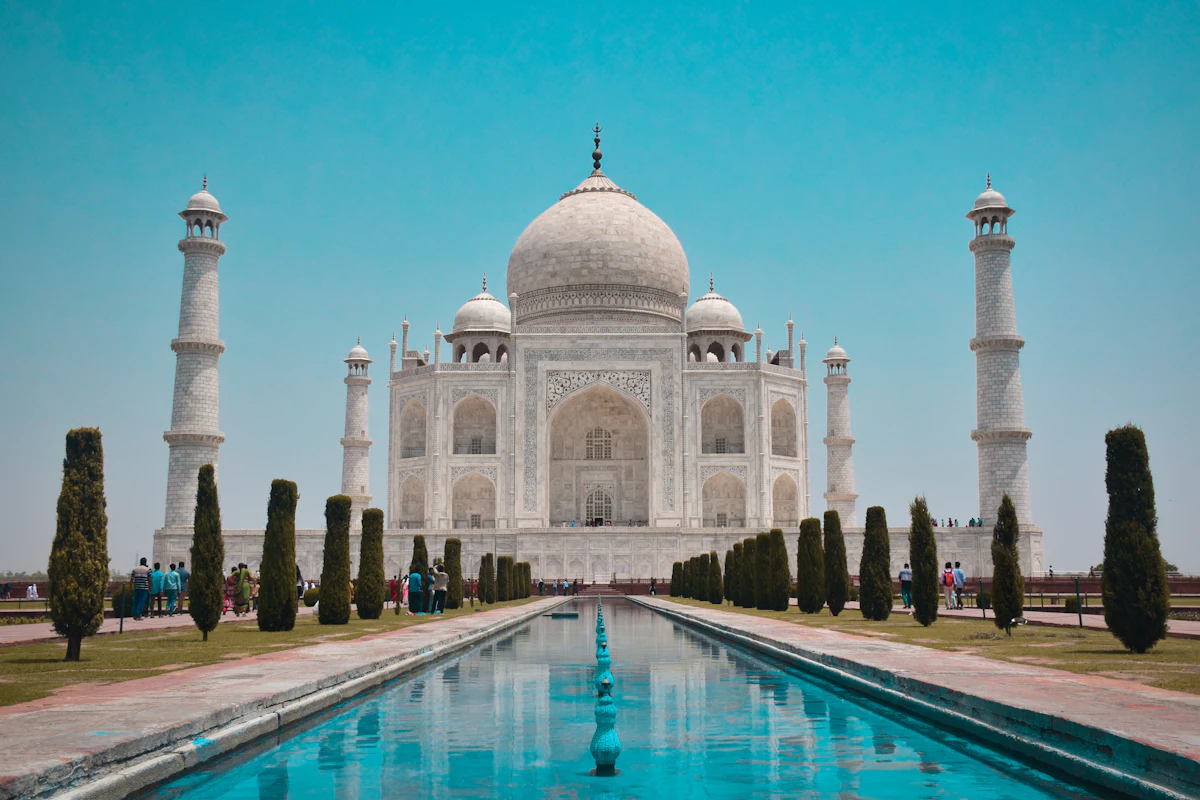
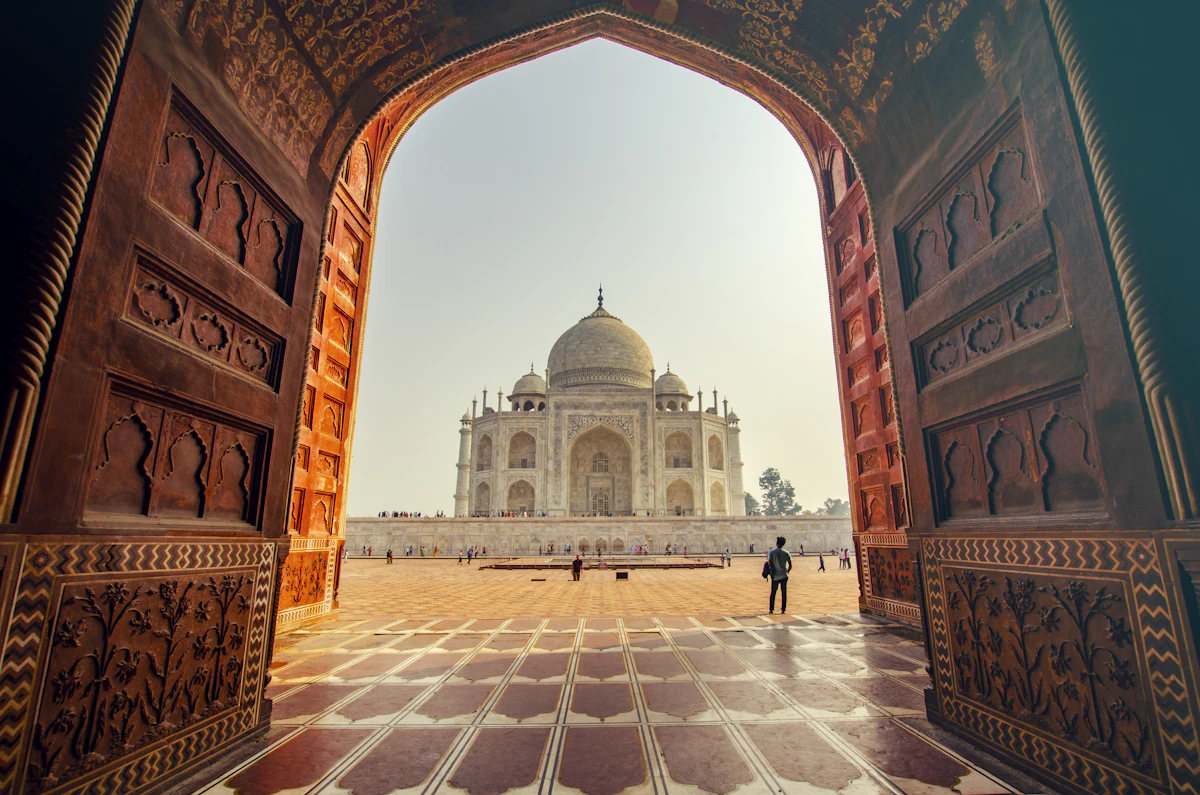
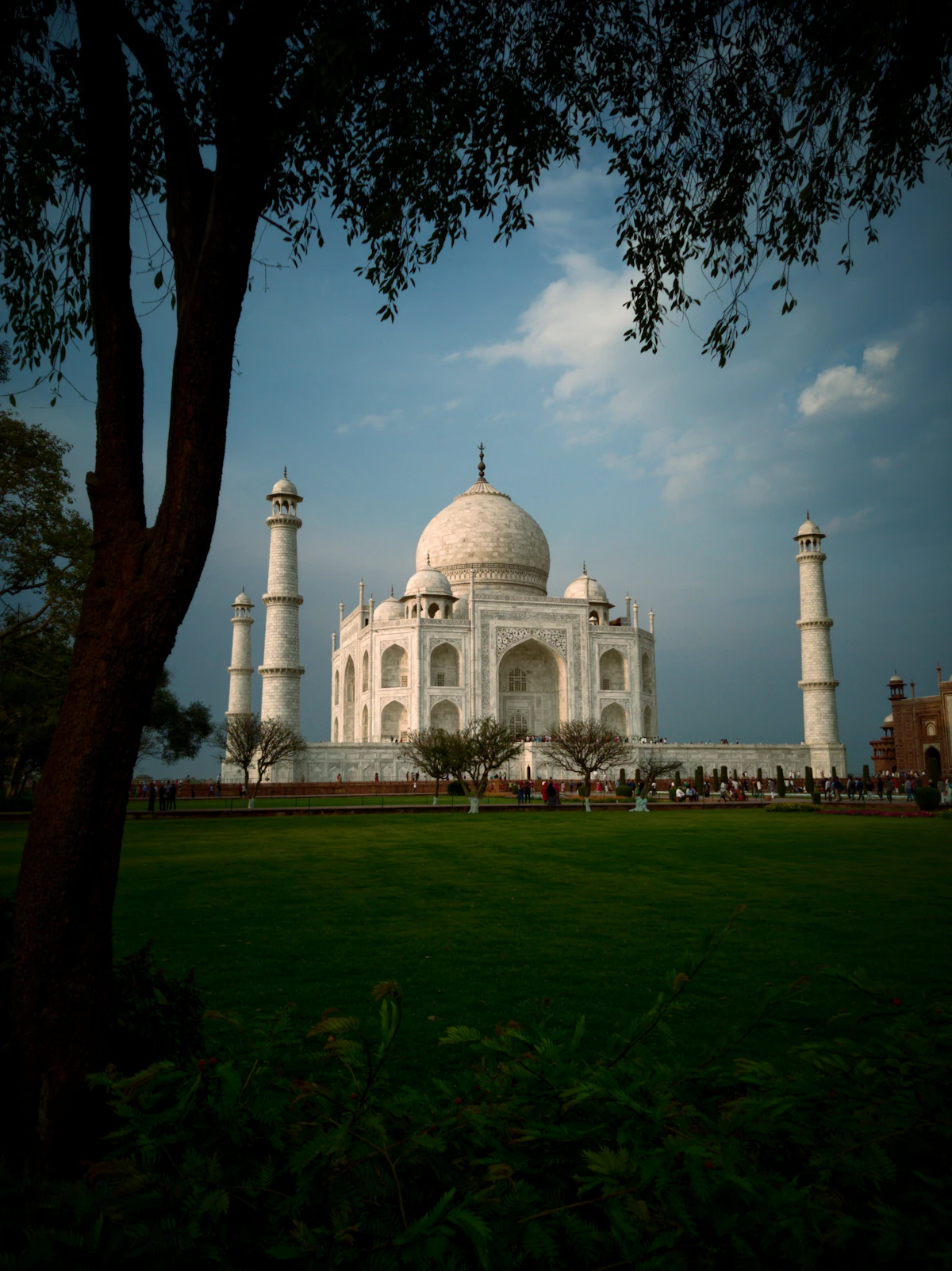
Unhurried exploration of the Taj Mahal grounds and mausoleum with your private guide, timed to coincide with the best early morning light and before the main crowds arrive.
Breakfast at a recommended Agra restaurant or hotel.
Visit Agra Fort, where Emperor Shah Jahan spent his final years under house arrest.
Optional visit to a marble inlay workshop to see artisans practising the same techniques used on the Taj itself.
Lunch in Agra (optional, at your own arrangement or recommended by your guide).
Afternoon departure back to Delhi, with flexible timing based on your evening plans.
Drop-off at your Delhi hotel or directly at the airport, as required.
For travellers with limited time — a business trip with one free day in Delhi, a long layover, or simply guests who want to see the Taj Mahal without committing to a multi-day Rajasthan itinerary — this single-day private journey delivers the single most important sight in India with the same level of care and privacy as our longer tours, simply compressed into one extraordinarily well-organised day.
The Taj Mahal receives several million visitors annually, and by mid-morning, particularly during the October-to-March high season, the monument’s grounds can feel genuinely crowded — not dangerously so, but enough to meaningfully change the experience from contemplative to logistical. The entire structure of this day exists to avoid that: an early departure from Delhi timed so you arrive at the Taj Mahal’s gates close to opening, when the light is at its most beautiful and the crowds have not yet built.
This single decision — leaving early enough — is, in our experience, the difference between guests who describe the Taj Mahal as “beautiful but very busy” and guests who describe it as one of the most moving experiences of their life. We build the entire day around protecting that first hour, and our drivers and guides have run this exact route enough times to know precisely when to leave given that day’s specific traffic patterns, time of year, and even local festival or wedding-season congestion that can occasionally affect the highway.
Agra sits approximately 230 kilometres from Delhi, connected by the Yamuna Expressway, a modern six-lane highway that reduces the journey to roughly three to four hours depending on traffic and your exact departure point. Our private vehicles are equipped for comfort over this distance — air conditioning, charging ports, and a driver experienced specifically with this route, who knows which rest stops offer genuinely good coffee and clean facilities versus which to avoid. For guests who prefer not to drive at all, we can also arrange travel by the Gatimaan Express, India’s fastest train, which covers the same distance in under two hours, though this requires a more rigid schedule than the flexibility a private vehicle allows.
Many guests use the drive itself productively — catching up on sleep after a long-haul flight the previous night, or simply watching the landscape shift from Delhi’s dense urban sprawl into the more rural stretches of Uttar Pradesh, dotted with mustard fields (a vivid yellow if you are travelling between December and February), brick kilns, and small roadside dhabas where truck drivers and locals stop for chai. Your guide is happy to talk throughout the journey or to simply let you rest, depending entirely on what you would prefer that day.
Your guide will meet you at the gates and remain with you throughout your visit, with no fixed time limit — some guests are satisfied after ninety minutes, others wish to spend three hours simply absorbing the detail of the inlay work, the symmetry of the gardens, and the changing light as the sun rises higher. We do not rush this; the entire point of structuring the day around an early departure is so that you have the luxury of unhurried time once you arrive.
Your guide will walk you through the monument’s construction history — commissioned by Emperor Shah Jahan in 1632 as a mausoleum for his wife Mumtaz Mahal, completed over more than two decades using craftsmen and materials drawn from across the Mughal Empire and beyond — as well as the architectural details that reward closer attention: the pietra dura inlay work using semi-precious stones imported from as far as Afghanistan and Sri Lanka, the calligraphy bands quoting the Quran with deliberately increasing letter size toward the top to maintain visual consistency when viewed from the ground, and the precise symmetry that extends even to “false” elements built purely to preserve visual balance.
We also make a point of explaining the lesser-known details that most guidebooks skip entirely: the reflecting pool’s precise alignment so the Taj is mirrored exactly along its central axis, the use of optical illusion in the minarets (which lean very slightly outward so that, if they ever collapsed, they would fall away from the main dome rather than onto it), and the way the marble itself appears to change colour throughout the day — pink-tinged at dawn, brilliant white at midday, and golden as the sun sets — a phenomenon Mughal architects are believed to have deliberately exploited.
After the Taj Mahal, most guests choose to visit Agra Fort, a fifteen-minute drive away, where Emperor Shah Jahan spent his final years imprisoned by his own son, Aurangzeb — reportedly able to see the Taj Mahal from his cell window, a detail that adds genuine poignancy to a visit here. The fort’s Mughal architecture, blending red sandstone with later white marble additions, offers a useful contrast to the Taj’s singular focus, showing how Mughal architectural style evolved across different rulers and purposes.
For guests with extra time built into their day, a marble inlay workshop visit is also commonly included, where craftsmen — some from families who can trace their lineage back to the artisans who worked on the original Taj Mahal — demonstrate the same pietra dura techniques still practised today, cutting and polishing semi-precious stone by hand into the floral and geometric patterns that have remained essentially unchanged for nearly four centuries.
Depending on your flight or onward commitments, we typically plan the return drive to arrive back in Delhi by early evening, though this is entirely adjustable — some guests prefer a late afternoon departure from Agra to also catch the monument in softer late-day light, while others with an early flight the next morning prefer to keep the return drive earlier. Your specialist will confirm exact timing based on your specific schedule before the day is finalised, and your driver will stay in continuous contact throughout to adjust for any unexpected delays, whether from traffic, weather, or simply your own wish to stay a little longer at any particular stop.
This itinerary is particularly popular with business travellers extending a trip by a single day, cruise passengers docked in the region with limited shore time, and families travelling with young children for whom a multi-day Rajasthan itinerary may be more demanding than a single, brilliantly executed day. It is equally well suited to travellers who have already explored other parts of India on previous trips and specifically want to focus this visit on the Taj Mahal alone, without re-covering ground from an earlier journey. Despite its brevity, every element — the private vehicle, the dedicated guide, the careful timing — receives exactly the same attention as our longer journeys, because for many guests, this single day becomes the defining memory of their entire trip to India.